


New from Michèle Phoenix. Read more and order HERE.
“A deeply moving and essential read for MKs, TCKs, and the parents and caregivers who support them. This book is a lifeline for those seeking understanding and connection in their journey. An absolute must-read!”
Kath Williams
National TCK Coordinator, TCK Interlink
The full, three-part series on TCKs and Neurodiversity is here. This article is also available in audio form on the Pondering Purple Podcast.
This is not a comprehensive treatise on the intricacies of neurodiversity. Though I touch on several key aspects of it, specifically among TCKs, it would take volumes to fully explore such a complex topic. Instead, this is an introductory article, which I hope will begin a larger conversation about the gifts and challenges of the neurodivergent MKs in our cross-cultural communities. As a springboard for further personal exploration, I’ll include links to quoted materials and to other pertinent resources at the end of this post.
I interviewed eleven TCKs in preparation for this piece, and a long-form video revealing more of their stories will be coming soon. You do not want to mis s hearing from these bright and fascinating people about how they’ve experienced their difference!
Until then, you can learn a bit more about the contributors by clicking this TCK Profile link. It will take you to a page where you’ll find their pictures and other pertinent information. (If you want to be notified when their video becomes available, drop me a note and write “Notify me” in the subject line.)
NEURODIVERSITY IN THE WORLD OF TCKs
There is a particular kind of exhaustion that many globally mobile families have experienced. The kind that feels linked—sometimes in obscure ways—to that third airport security line, that calendar-busting conference, that language-learning plateau, that brutal goodbye to friends we may not see again, that moment your child dissolves into tears because the cereal tastes different in this country, or that weather pattern that sucks the life out of everyday activities.
In the cross-cultural community, we tend to tell ourselves that it’s transition stress. Culture shock. Jet lag. Grief. And often, it is—or a combination of them all.
But there can also be something more complex happening beneath the surface. Something quieter, more deeply wired into the way a child experiences the world—or in the case of MKs, multiple worlds.
The adult TCKs interviewed for this project gave us some insight into early signs of their brains functioning differently—which I’ll share here as a bit of an introduction. Note that they range in age from 23 to 64 and represent several different forms of neurodiversity. Click here to read more about each of them.
Megan (32): I was flighty and chaotic and loud and just unorganized.
Marla: I either fully understood something and could ace a test…or I was failing.
Corbin (32): When I was a toddler, if I couldn’t put my finger in my belly button in my car seat, I was inconsolable!
Jacob (32): I was hypersensitive, but also ashamed of it. Conflict was terrifying, because it agitated me and I didn’t know how to deal with that kind of neurological activation.
Anna (25): I’d get very fixated on a particular thing and dive super deep into it [until it became] kind of a personality trait.
Debbie (64): When I was three years old, I remember laying on the floor in the hallway, and thinking, “There’s all these bubbles in my head, these light floating bubbles. Other people seem to have words in their head. I have bubbles in my head.”
Alli (43): I was hyper-empathetic, which is true of a lot of women who have ADHD and autism.
Elijah (28): The giftedness was probably the first thing that was evident. Many people said, “Oh, you’re super intelligent, really smart.”
Emilie (23): My grandmother would come back from Mexico and bring a whole bunch of seashells, and I would line them up in a row based on size or color.
Camille (30): I loved Star Wars, that was a big thing. But I loved it to a point where I was a ten-year-old that was cosplaying with my little cardboard lightsaber and running in the woods for hours and writing three-hundred-page novels on science fiction and fantasy.
Stephen (25): I had a hard time doing assignments. I never read the books all the way through. I think it was around first year of grad school where I was like, something’s different, something’s wrong.
What is neurodivergence?
In recent years, conversations around neurodiversity have become far more common. There’s a good reason for that. Current estimates suggest that between 15% and 20% of the population may be neurodivergent. It’s no wonder that efforts to deepen our understanding are expanding. Given the volumes of information available on this topic, I’ve found MEDvidi’s page to be a concise, clear, and helpful source of information. These are the key definitions highlighted there:
- Neurodivergence means that a brain functions differently from what is considered usual or “typical.”
- Neurodiversity embraces the idea that everybody’s brain works uniquely and that neurodivergence is a normal variation.
- The four most common forms of neurodivergence are ADHD, autism, obsessive-compulsive disorder, and dyslexia.
The umbrella term of neurodivergence is much broader than most of us realize. Autism, ADHD, OCD, dyslexia, sensory processing differences, dyscalculia, traumatic brain injury, and other neurological differences all fall under this wide-angle word.
Neurodivergence can show up in countless ways—from sensory overwhelm to learning differences, intense creativity, diminished executive function, or information-processing that differs from the processing of brains considered “typical.”
The strengths of neurodivergence
Though neurological brain differences were formerly viewed simply as deficits, researchers and clinicians now understand neurodivergence as part of the natural variation of human brains—producing unique strengths and unique challenges.
It’s imperative to note that these same TCKs wrestling with layers of difference often also possess extraordinary gifts.
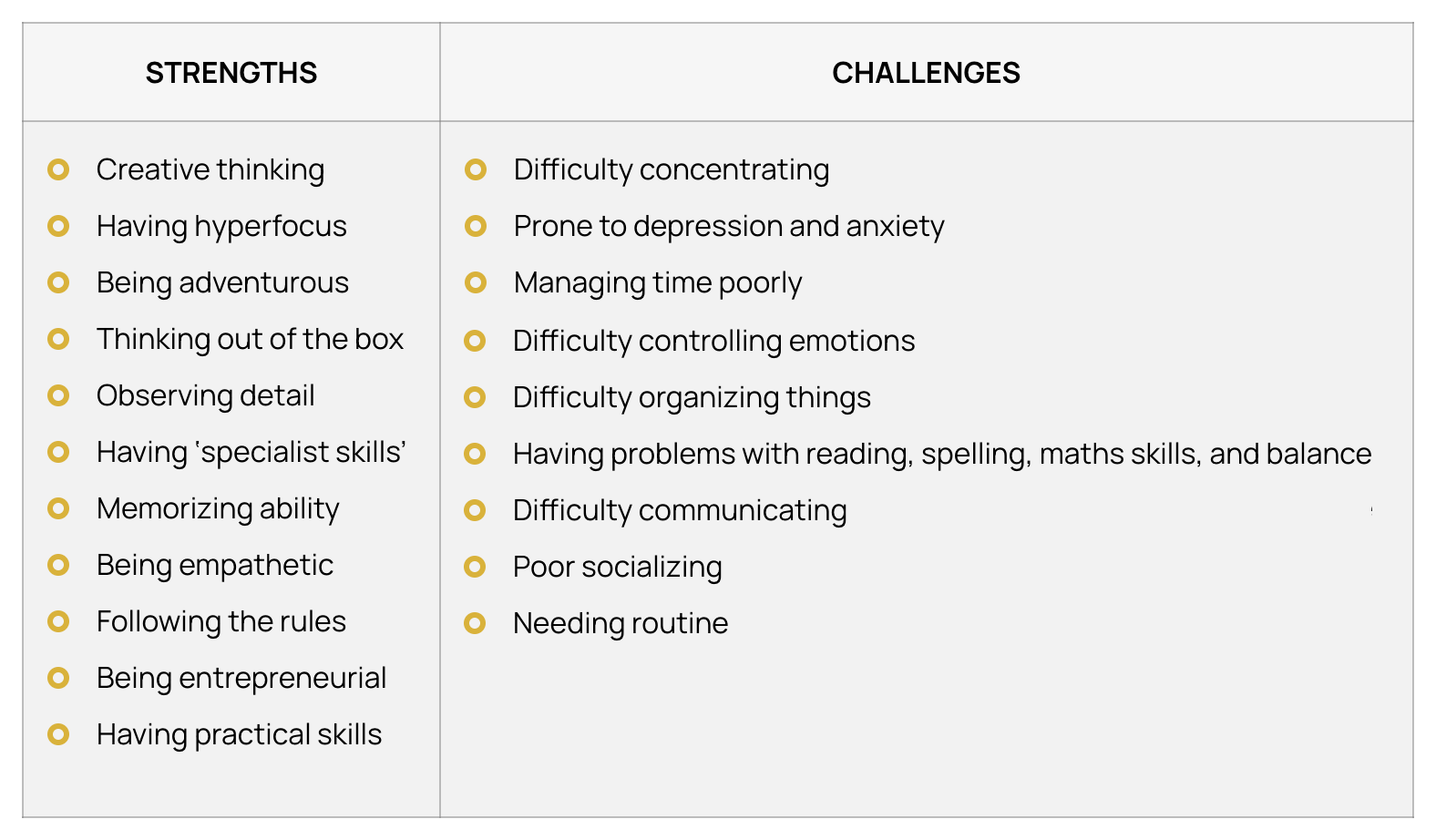
In her article “At the Intersection: Navigating Neurodivergence and Third Culture Kids,” Dr. Kristen Williamson highlights the creativity, innovation, empathy, deep focus, and problem-solving abilities that frequently accompany neurodivergence. The child who notices details everyone else misses. The teenager who learns languages through patterns and rhythms. The young adult whose emotional sensitivity allows them to connect deeply across cultures.
Sometimes the very wiring that makes life more complicated also allows a child to experience beauty, excel in academics, analyze complex data, and respond with empathy more naturally than the rest of us do.
Debbie: Our brains see details [from which] we build patterns. We know what’s happening and going to happen.
Elijah: The pattern recognition is great because we’re able to see different [ways of expressing] emotions and thinking—and all per culture.
Marla: I graduated valedictorian twice, high school and college.
Megan: I’m really quick on my feet in a lot of situations. I like to try new things. I have a lot of hobbies, a lot of interests, which is fun because I’m never bored.
Alli: For me, and many other women who are neurodivergent, we are hyper empathetic. We want to help people who are hurting.
Neurodivergence in cross-cultural spaces
For Third Culture Kids, neurodivergence can create a particularly layered experience because so much of TCK life already requires constant adaptation. New schools. New languages. New social rules. New expectations. New relationships. New losses.
Indian writer and advocate Nanyadiri, who is autistic and has ADHD, describes the autistic TCK life as “a difference inside a difference.” The phrase captures something globally mobile families recognize in their children with neurodivergence: some of them are not merely learning to adapt across cultures; they are trying to navigate a world that was already unpredictable, confusing, or painfully loud in its monocultural form—and is now exponentially more overwhelming.
Stephen: For the longest time, I thought that it was just because I’m mixed and I’m a missionary kid. That’s why I as different. That’s why I had trouble making sense of the expectations of people around me.
Jacob: A neurodivergent TCK is having trouble connecting with people because he’s a third culture kid and because his brain works differently. The entanglement of those things can be really exasperating, and it might be useful to kind of approach them both as real and as separate.
Camille: I always felt a little odd compared to others. And I associated a lot of my differences with being a TCK—because you’re never fitting in completely with groups.
The assets and beneficial traits that often go hand in hand with a neurodivergence diagnosis, as explored previously, are important and worth nothing—just as the challenges are. Chief among those challenges for neurodivergent TCKs is transition.
Granted, transitions can be destabilizing under any circumstances, but in “How to Help Neurodiverse TCKs in Transition,” Jenilee Goodwin considers the topic from the specific perspective of neurodivergent Third Culture Kids. She finds that what is destabilizing for typical minds can be profoundly disruptive to those whose function and needs are shaped by autism, ADHD, and other diagnoses that fall under the neurodiversity umbrella. Airports. Temporary housing. Shifting routines. New foods. Unfamiliar smells. Different classroom expectations. New cultural customs and behaviors. Unspoken attitudes around rest and self-care. All the unpredictability that globally mobile families eventually normalize can feel deeply dysregulating for a child whose nervous system craves predictability and safety.
For many children, the adventure of it all feels exhilarating. But for those with some forms of neurodivergence, it might feel more like being forced to stand in the chaos of Times Square at rush hour—with strangers yelling questions at them, street vendors trying to sell them items they don’t recognize, friends shoving new foods at their faces, and a thunderous storm assailing them with rain and wind—all while realizing that everything that was familiar (people, places, routines, their own bed) is no longer within reach.
Imagine that destabilizing scene. Then imagine trying to manage it 24/7—without protective filters, escape routes, or loved ones who understand how very exhausting it is.
Neurodiversity and transition are certainly a demanding combination, but the challenges of being neurodivergent in the world of cross-cultural ministry don’t end there. For those who love TCKs with autism, OCD, and other umbrella diagnoses, being able to distinguish between brain differences and cross-cultural traits can be difficult. Being multicultural too often masks brain differences and leads to delays in finding vital support.
Stephen: Do I work differently because I’m from another culture or do I work differently because my brain’s wired differently?
Anna: I thought [my challenges were] just a missionary thing that I could overcome by studying people and by working to understand people. But knowing that it wasn’t just that, that it was autism that I was experiencing, [helped]. It wasn’t just me not trying hard enough.
Jacob: I think, [my autism] overlaps with the TCK experience. I just felt weird everywhere. In general, I blamed it on being a third culture entity. “I don’t fit in the Philippines because I’m Canadian. I don’t fit in Canada because I lived in the Philippines.”
Camille: I am smart and very aware of human interactions and psychology. It was actually an advantage as a TCK—I was able to figure out how to fit into cultures faster.
The tangled strands of neurodivergent and TCK traits
One additional element of complexity for globally mobile families is that the impact of neurodivergence, trauma, and chronic stress can sometimes look surprisingly similar. Frequent moves, unresolved grief, political instability, educational disruption, repeated upheaval, and subjection to abuse can affect a child’s nervous system and cause him/her to act in ways that mask ADHD, autism, and other traits associated with neurodiversity.
This can cause caregivers and communities to attribute struggles—academic, social, emotional, functional—to “growing up between worlds” rather than signs that this child or teenager might benefit from a different kind of help than what’s being offered.
In “How to Notice Neurodiversity in Third Culture Kids,” Jenilee Goodwin explains that neurodivergent TCKs often slip under the radar because globally mobile life itself already looks unconventional. A child who struggles socially may be assumed to be adjusting to a new culture. A child who becomes overwhelmed in crowds may be labeled sensitive. Executive functioning difficulties may be blamed on transition stress rather than recognized as part of ADHD or autism.
It is also important to note that neurodivergent children are often more deeply affected by mission-world stresses than their peers because of different processing capacities/styles—and because their brains are already working overtime to metabolize the world around them. A child who seems inattentive, emotionally reactive, socially withdrawn, or chronically overwhelmed may be exhibiting signs of intense TCK struggles. Or that child may be externally expressing an internal brain-function difference. Or—quite frequently—what we’re seeing could be a combination of both.
This is why untangling the strands of TCKness and neurodivergence is so complicated. It will take time, learning, wisdom, and often an investment of effort and funds in securing professional evaluation. Understanding the “why” behind children’s behavior will be essential in reaching for the kind of support that will address their needs in specific ways—rather than applying to brains that work differently the kind of support that could actually exacerbate their struggles.
Knowing more can change the entire conversation from frustration to compassion, and then to appropriate action.
Marla: The number one thing that I want you to know is that you need to slow down and seek to understand. Don’t expect this student, this child, this person to live and function and work and think the way that you do.
Elijah: Just observe. And if you suspect something, find a medical professional who actually knows their stuff.
Megan: Be curious first, when you’re seeing some of those difficulties.
Debbie: The most important thing is that the child and the parent realize this kid is legitimately different. They have a reason to be different. That is how they are in the cells of their being. What seems like a preference must be acknowledged as a need.
Stephen: Be patient with your kids. There’s a lot of stuff that your kids are also processing at the same time that you are, but they don’t have the language to talk about it yet.
Alli: It would be wonderful if caregivers, parents—anybody who is interacting with TCKs or MKs on the field—would respond with curiosity. That would have been completely life-changing.
Debbie: Embrace their divergent conditions as their primary reality.
The realities of masking
Beyond the similarities between TCK and neurodivergent traits, another reason neurodivergence gets missed in cross-cultural communities is that so many of those children become exceptionally good at masking. Especially TCKs. Especially bright, capable, adaptable children who are praised for maturity and flexibility.
Girls, in particular, are often missed because their struggles do not match traditional stereotypes of neurodivergence. Rather than appearing disruptive or hyperactive, many neurodivergent girls become experts at people-pleasing, perfectionism, emotional caretaking, or quiet overachievement. They may look socially successful while privately rehearsing every conversation and analyzing every interaction afterward. Some become deeply anxious. Others become chronically exhausted from trying so hard to make their daily coping appear effortless.
In missionary and ministry environments, children who mask well are often celebrated as adaptable, mature, helpful, and selfless. Meanwhile, they may be carrying extraordinary levels of internal stress that few people notice.
And boys can mask too, of course—especially thoughtful, sensitive boys who learn early that emotional overwhelm or social confusion feels unsafe to reveal. But because many people still picture neurodivergence primarily as a loud little boy bouncing off classroom walls, quieter presentations are frequently overlooked altogether.
Alli: It’s very likely that a lot of neurodivergent TCKs and MKs are masking very heavily when they’re interacting with you. They may not come across as being autistic or having ADHD, but they’re probably drowning inside. TCKs and MKs have a lot of spoken and unspoken expectations put on them. Many of those people try to regulate themselves inside so that they can meet those expectations—because if they don’t, maybe they’re going to hell.
Camille: There was a lot of loneliness. I’d get scared of human interaction because I didn’t have the energy to mask.
Jacob: By my adolescence, I was effectively masking. My whole life had folded around the question of whether I am wrong or acceptable. It had calcified into an attempt to present a version of myself to the world that would finally validate me as not fundamentally wrong.
Anna: Most kids who grow up with autism or ADHD in some kind of way mask their symptoms a little bit. Or a lot. I do think missionary kids experience that to a very high degree.
Camille: I struggled (and still do) with relationships because masking is tiring. If I don’t mask, I am told that I don’t show enough emotion on my face and that I am too literal. If I do mask for too long, I go into a huge period of deep depression, which has led to suicide attempts between the ages of 14 and 29. The best times of my life have been when I keep people at a distance.
So many neurodivergent TCKs are working tirelessly behind the scenes to appear “fine.” They study social expectations. They rehearse conversations internally. They carefully observe peers in order to imitate what seems socially acceptable. They hold themselves together all day long and then collapse emotionally once they reach home.
One of the dangers associated with these efforts is beautifully stated by psychologist Laura Mannucci in her article, Belonging in Translation: Autism, ADHD, and the Hidden Labor of Adapting Across Cultures: “When you have learned to mirror others to belong, the authentic self becomes hard to locate.” The immense mental effort required to constantly decode cultural expectations, while also navigating neurodivergence, is something Mannucci calls, “An ongoing negotiation between worlds.” For many TCKs, that hidden and protracted hypervigilance becomes a way of life and an exhausting drag on their supplies of energy.
Our contributors described the constant output of life-energy in these ways:
Alli: When you have both autism and ADHD, your brain is trying to move in two completely different directions at all times. Your ADHD brain is always seeking rewards and stimulation, and on the autistic side of me, I need calm, I need structure.
Elijah: Gifted burnout is a big thing and it’s not particularly well understood because it’s not just regular burnout. Regular burnout, you rest, you recover, you’re fine. Autistic burnout builds over time and takes a significant amount of time to recover from as well.
Anna: I learned to mask my symptoms when I was a kid. My “resting face” was I would smile all the time. And nobody could tell when I was angry or sad about anything.
Emilie: It was hard enough just to learn the language. [Add to that] having a learning challenge in a [school] system that doesn’t understand neuro-divergency… I wasn’t easy.
Elijah: The world wasn’t created for neurodivergence. Many neurodivergents will say, it’s too bright. It’s too loud. It’s too smelly. It’s too cold, too hot, too windy. The clothing doesn’t feel right.
Camille: I love people in my home, but I don’t like the interaction part. So I like being in an adjacent room. I like hearing people laughing and all that stuff. I just don’t want to be in there.
Faith and neurodivergence
Neurodivergent children may also experience faith and spirituality differently in ways that are easily misunderstood in ministry settings. In “Autism & Christianity: A Square Peg in a Round Hole?” Jonathan Machnee notes that many autistic Christians feel as though Christianity is communicated primarily through neurotypical assumptions and expectations.
In highly relational or emotionally expressive ministry cultures, autistic TCKs may struggle to connect through the same spiritual language or practices that come naturally to others. A child who dislikes large worship gatherings, avoids eye contact during prayer, asks highly analytical questions about faith, or struggles with emotionally demonstrative forms of spirituality may mistakenly be viewed as spiritually disengaged when she may, in fact, be engaging very deeply—but differently.
Some neurodivergent children connect to faith through logic, structure, ritual, justice, study, honesty, or quiet contemplation rather than outward emotional expression. And when churches or ministry communities fail to recognize those differences, neurodivergent children can quietly begin to feel as though there is something wrong not only with their brains, but with their faith.
Jacob: People with sensitive bodies matter in the Kingdom of God. The Church has chronically dismissed sensitive people, preferring instead to elevate the kind of triumphant, extroverted…functional [person]. We “weirdos” are actually necessary, and embodied theology really matters. So my autism—my sensitivity—says not just that MKs matter, but that their bodies and their dignity matter.
The relief of diagnosis
Of the adult TCKs interviewed for this article and the upcoming video, most of them weren’t diagnosed until they were adults. Sometimes the diagnosis came after burnout. After reentry. After struggles in higher education, or after years of wondering why ordinary life seemed to require extraordinary effort.
For many neurodivergent people and their families, the diagnosis itself is not the devastating moment they feared. Often, it brings relief—because there is finally language for their strengths and challenges. There is finally an explanation for why transitions feel catastrophic instead of merely difficult. Why noise feels physically painful. Why social interaction requires marathon-level energy. Why one can appear perfectly composed in public and completely unravel at home.
Debbie: From the age of 11 to my diagnosis at age 53, I continually had thoughts of not wanting to live. All that stuff naturally dissipated with my autism diagnosis. Knowing who I am, knowing that I am inherently different.
Alli: As soon as I knew that it’s not my fault that I am this way and that there are other people like me, it just shifted everything.
Elijah: It was a relief in many ways. There’s [also] expected grief from it not being seen or identified earlier, not having tools, the support that really you should have had.
Anna: It didn’t feel like putting myself in a box. It felt more like a release to me.
Emilie: I didn’t understand what was wrong with me. I didn’t understand why I was functioning the way I was functioning and why everybody seemed to hate me. So when I finally got diagnosed with autism at 21… Just learning that and being able to sit and be like, “Well, I’m not broken. I’m not too much. I’m just wired differently.” It changed so much for me.
What neurodivergent TCKs need from all of us
According to the TCKs I interviewed, one of the gentlest shifts parents can make is moving from disciplining difference to approaching it with curiosity. Instead of asking, “Why is my child overreacting?” asking, “What might this situation feel like inside my child’s nervous system? What could be the reason for that?” Instead of rewarding the masking that allows their children to hide their true selves and appear more “typical,” investing time, effort, and funding into the kind of research and testing that might uncover liberating answers.
And then extending love—because there are far too many neurodivergent TCKs who believe that their brain difference is failure, weakness, and even sin. We as a community need to speak—and be—the antidote to those destructive lies.
What do our participants wish someone had told them?
Stephen: I wish people had told me that it wasn’t a moral failing. You’re not broken and it’s not your fault. God is big enough to have known and have planned for it.
Alli: You’re normal in your own way. This is not your fault. This is just how your brain works.
Jacob: It’s okay to be sensitive. And it’s a gift. We’re not aberrations. And we’re not burdens. I have a place in the world. I have a place in the body of Christ. I’m not kind of a weaker version of other people.
Anna: You’re not going to be lonely forever. You’re going find people who want to understand you and people who do understand you better than the people you’re with now.
Jenilee Goodwin encourages families in transition to build predictability wherever it’s possible. Visual schedules. Familiar foods. Comfort objects. Advance warning before changes. Recovery time after overstimulation. Small rituals carried from country to country.
In all phases of the ministry life, implementing small changes or adding new routines to neurodivergent children’s daily experience might foster more stability and safety. Limiting the time commitment of social activities and planning respite days between them. Developing practical ways to harness focus and remember household tasks. Figuring out what toxic stresses can be eliminated or mitigated. Educating siblings and community members about the differences they’re seeing. Carving quiet parentheses into busy days. Supporting activities that allow for regulation and expression: art, movement, writing, creating, organizing, inventing, or analyzing. Adjusting family menus to avoid textures and tastes that are intolerable to the child. (For so many autistic children, it’s not just a food preference—it’s a visceral incapacity to get past the texture or taste.)
These things may sound insignificant to people who function more typically, but to a neurodivergent child, they can feel like safety in the swirling center of threatening chaos.
Parents may also need to reevaluate expectations around their children’s pace and productivity. Many neurodivergent TCKs can technically endure crowded schedules, rapid travel, highly stimulating ministry environments, and constant social interaction…while paying an invisible emotional cost. A child may be coping remarkably well on the outside while quietly unraveling internally.
There’s a huge difference between surviving and flourishing.
Corbin: There were some days where by noon I had to lay down, because my brain felt so fried from fighting against things that I was having a compulsion to do.
Debbie: We are forever like the brand-new baby taking in all this sensory information, [without the nervous system filtering out unnecessary aspects], which amounts to traffic jams in our body and brain.
Emilie: I was terrified of people. I was throwing up because I was so stressed. I had so many physical symptoms that I could not handle it.
The beauty in the difference
Goodwin’s articles also emphasize the importance of helping children understand their own brains with dignity and compassion. Neurodivergent children need language that frames their differences not as personal failures, but as part of their unique wiring. Dr. Williamson argues that when neurodivergent TCKs are given understanding and support, many develop exceptional resilience, intercultural awareness, empathy, and creativity.
When I speak with adult TCKs who received a diagnosis about what they wished someone had told them sooner, they point to the crucial importance of parents and loved ones affirming who they are—and defusing the lies the world and their own inner voice might inflict on them. This is what they wish they’d heard:
Corbin: It’s not your fault; you didn’t cause it. I’m not where I wish I were in life, but it got a lot easier to tolerate when I just decided it’s not my fault.
Marla: It’s really okay to make space for and accept the part of you that doesn’t feel like it fits in with the rest of the world. And that actually doing that is what’s going to help you to live more freely.
Megan: This isn’t only a challenge. Because of ADHD, these are the gifts that you bring to the world. This is a gift that you need to learn how to harness and not view it as a negative character quality.
Marla: You don’t have to be perfect. That voice in your head is not speaking the truth to you. God made you uniquely you. And that includes the way your brain is wired. You are needed in the world exactly the way your brain is wired: your giftedness, and your unique kills and ability to see and read patterns in the world, and understand the nuances of how people interact, and how situations can change on a dime. Being able to read people’s energy just so intuitively that you can feel when the room has shifted. All of these are good things.
Perhaps one of the most hopeful truths emerging from these conversations is that so many neurodivergent TCK adults—with affirmation, care, support, and therapy—eventually come to see their differences not merely as obstacles, but as part of the very wiring that shaped their strengths. The sensitivity that once led to overwhelm becomes empathy. The hyper-awareness becomes emotional intelligence. The lifelong practice of observing cultures and decoding people becomes insight and wisdom.
The traits that complicated childhood often become part of what allows these adults to move through the world with unusual compassion, creativity, and depth.
Not despite their wiring.
Because of it.
And perhaps that is the invitation here—not to pathologize difference, nor to romanticize struggle, but to notice children more carefully. To listen more curiously. To create environments where they do not have to spend their lives pretending to be less sensitive, less intense, less observant, or less themselves in order to belong.
Because some of the children who experience the world most deeply may also be the ones most capable of helping the rest of us to see it more clearly.
They are not broken.
They are not burdens.
They are unique, precious, created by God, and so very loved by him.
NOTE: This article focuses on the experiences and needs of neurodivergent TCKs who have higher-level everyday skills and need less intensive support. It’s important to recognize that there are other TCKs whose capacity for speaking, processing, and caring for themselves requires more constant and specialized assistance. As a community, we need to honor these families by our presence and support. This article from Child Serve offers some great suggestions.
Suggested further reading
Belonging in Translation — Laura Mannucci
Different, Not Less — Chloé Hayden
Divergent Mind: Thriving in a World That Wasn’t Designed for You — Jenara Nerenberg
Driven to Distraction — Hallowell & Ratey
Embracing the Autism Spectrum — Dr. Stephanie Holmes
Lost in Translation: The Social Language Theory of Neurodivergence — Janae Elisabeth
Neurodiversity for Dummies — John Marble, Khushboo Chabria, and Ranga Jayaraman
Uniquely Human — Barry Prizant
Uniquely Us — Dr. Stephanie Holmes
Unmasking Autism — Devon Price